

Choosing the best loft insulation for your roof type can be overwhelming. You need to consider many things, including the size and shape of your roof or loft, whether it’s prone to damp and mould, energy efficiency, and even environmental impact. This guide breaks everything down and makes it easy for you to decide which kind of loft insulation is best for your property.
Table of contents:
- Preparing your roof
- Warm roofs vs cold roofs
- Identifying your roof type
- Environmental factors
- Final thoughts
Preparing your roof
Before installing any insulation, make sure your roof is secure and free of cracks and gaps. Seal any holes that let air or water in. Depending on the severity and your DIY experience, you may need help from a professional.
Next, check that your loft has good ventilation. Without it, condensation can form and lead to mould and rot behind any insulation you lay. Good ventilation also maximises your insulation’s effectiveness.
Warm roofs vs cold roofs
Before identifying your roof type, decide whether you want a cold roof or a warm roof. If you only plan to use your loft for storage and want a cost-effective option, choose a cold roof.
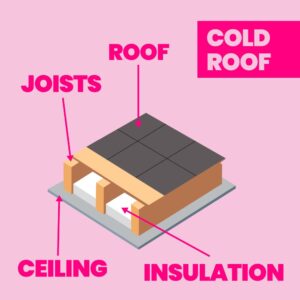
A cold roof gets its name because the space between the roof structure and the loft floor stays “cold.” The insulation sits in the loft floor, or the “ceiling” of the top floor. This uses much less insulation than a warm roof because it doesn’t cover the rafters above.
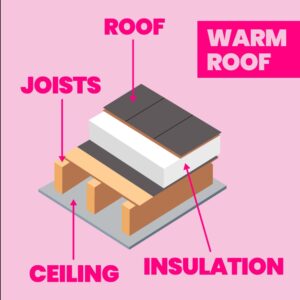
A warm roof works better if you want your loft space to be habitable. Any roof type can become either a cold or warm roof with the right insulation, though some shapes suit one method more than the other.
Identifying your roof type
Finding your roof type can be difficult and depends on whether you have a traditional or new-build property. Many roofs also go by several different names.
You need either a sloped or pitched roof to have a loft space, but these are broad categories that include many shapes and sizes. Identifying your specific roof type helps you understand how easily you can fit insulation, depending on whether you want a cold roof or a warm roof.
1. Gable roofs
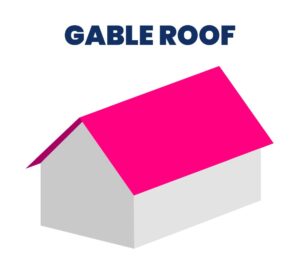
A gable roof is the most common roof type in the UK. It usually has two pitched or sloping sides that meet to form a triangle. The top point is the gable. This shape is straightforward with few awkward spaces, but the best insulation for this roof type depends on how you use the loft.
Firstly, decide whether your property needs a cold or warm roof. Because this is a standard residential roof type, either is suitable. Gable roofs ventilate easily, so condensation is rarely an issue. Whether you use the loft for storage or plan a loft conversion, both cold roof and warm roof insulation will work.
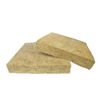
For cold roofs (between the ceiling joists), mineral wool insulation works well. It’s efficient, easy to install, and cost-effective, especially for large lofts. Leave a gap of around 50–100 mm above the insulation to allow ventilation.
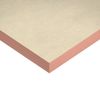
For warm roofs, install a breathable membrane to push moisture out of the roof void. Then fit continuous insulation above the rafters and below the membrane or waterproofing. Insulation boards such as PIR, phenolic foam, or mineral wool boards all create a solid barrier that keeps cold temperatures out.
2. Hip Roof
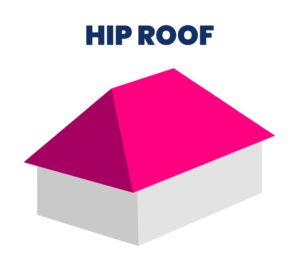
A hip roof slopes on all sides to meet at a single point or ridge. You can insulate it as a cold or warm roof, depending on your needs. Because of the sloped design, cold roof insulation can be harder to fit.
For cold roofs, mineral wool works well. The insulation sits under the loft floor and below the void, so it must allow moisture to pass through. Moisture from the house can then move into the ventilated loft space and dry out.
Ventilating hip roofs can be tricky. The whole internal roof structure must stay warm and dry. PIR rigid foam boards suit warm hip roofs because they’re lightweight, easy to cut, stocked in large sheets, and often foil-faced for vapour control.
3. Mono Pitch Roof
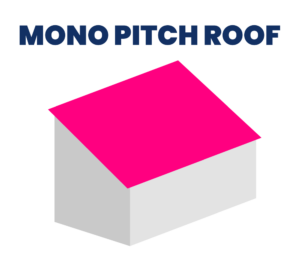
Mono pitch roofs (single pitch or single sloped roofs) have one sloping length. They suit warm roof insulation because cold roofs can trap condensation due to limited ventilation space.
If you choose a cold roof, ensure the pitch is steep enough for ventilation. Otherwise, condensation can build up. If the pitch allows enough space, mineral wool works well because it lets moisture pass through and dry out above.
If the pitch is shallow, consider a warm roof to avoid condensation damage. For warm roofs, phenolic insulation boards are a great option. They’re thinner than PIR boards but still offer strong thermal performance. Kingspan’s Kooltherm range works well above rafters.
4. Mansard Roof
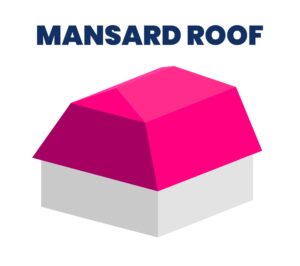
Mansard roofs have a double slope on each side, with the lower slope being much steeper. They work best as warm roofs because their complex design makes cold roof insulation hard to install.
Cold roofs aren’t recommended for mansard roofs. The many slopes and junctions make both fitting and ventilation difficult.
Warm roofs are the common solution. Install rigid insulation, like PIR, above the rafters. If space is limited, choose phenolic foam or mineral wool boards for fire resistance. You can also add insulation between the rafters, but install a vapour control layer (VCL) on the internal face of this to stop moisture entering the insulation.
5. Gambrel Roof
Gambrel roofs look similar to mansard roofs but have only two sides instead of four. Their structure is still complex, which makes cold roof insulation tricky.
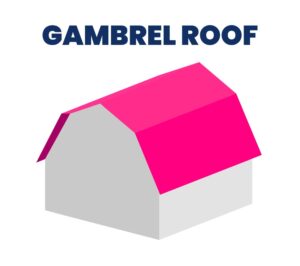
Cold roofs are possible but challenging. Glass wool or ROCKWOOL works well because they are flexible, and fit around awkward fixings and structural components. Install them between ceiling joists without blocking eaves ventilation. You can add layers above the joists to increase R-value. Fibreglass batts are another option if you want something lighter. Your main goal is to prevent thermal bridging, which happens when exposed rafters let cold air through.
Warm roofs are easier. You don’t need ventilation between the ceiling and the roof, and the rafters are less likely to suffer from condensation or thermal bridging. Install a breathable membrane to protect against wind and water ingress. Then, fit PIR boards above the rafters. For added protection, you can add insulation between rafters and install a VCL to block moisture.
Environmental factors
Whether you choose a cold or warm roof, insulating your loft is one of the most environmentally friendly home improvements you can make. It reduces the need for heating and cooling systems, cuts energy bills, and creates less demand for energy consumption.
Sustainability matters too. Mineral wool is a great option – rock wool often comes from recycled steel, and glass wool from recycled glass. Sheep’s wool and hemp are renewable, biodegradable, and require less production energy. They work well for both cold and warm roofs.
Final thoughts
You should now feel confident choosing your loft insulation and understanding where to fit it. Just ensure you protect all internal roof components from condensation for warm roofs, and maintain good ventilation for cold roofs. If you’d like a free quote on any insulation products mentioned here, feel free to call our customer service team on the number below.