

24th September 2026
Safety is paramount to any roofing project. While fire-rated roofing membranes offer protection in the event of a fire, there is much more to understand about why you need to install them. This includes meeting UK building regulations, the specific type of fire-rated membrane you require, installation processes, and the technical side of how they work.
This article will also provide you with expertly-picked product recommendations from Novia, an industry-leading brand in fire-rated membranes.
Table of contents
- What is a fire rated roofing membrane?
- Fire rated membrane classifications explained
- Why fire performance matters in roofing
- UK building regulations and standards
- Testing
- Novia fire-rated membranes comparison table
- How to choose the right membrane
- FAQs
- Final thoughts
What is a fire rated roofing membrane?
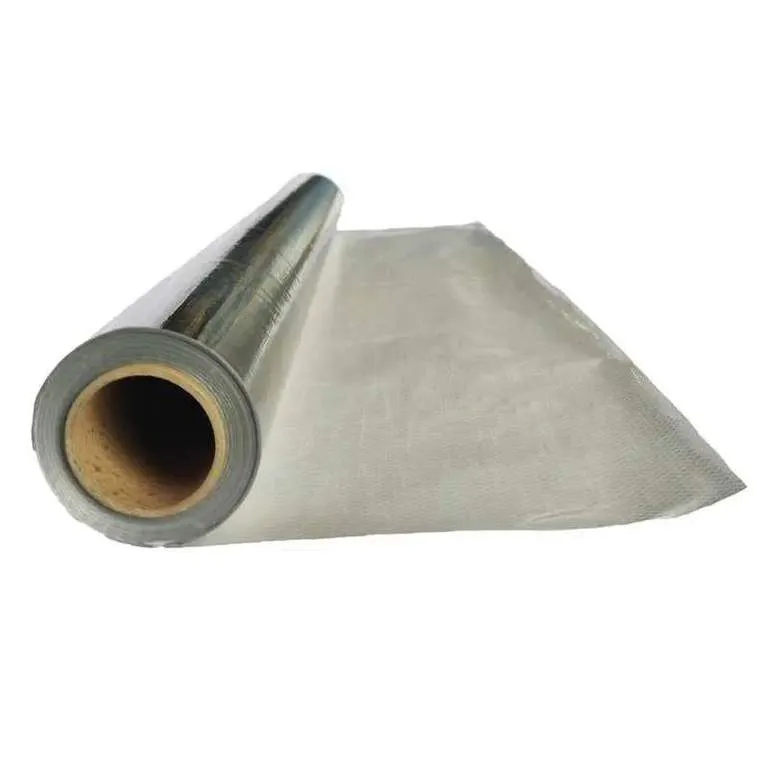
A fire rated membrane is a layer of material that offers weatherproofing properties for either the roof, wall, or floor, whilst also offering a specific level of fire protection. This can include anything from self-extinguishing properties to being 100% non-combustible.
Breather membranes vs VCLs – what’s the difference?
There are two types of roofing membranes. The primary difference between a breather membrane and an air and vapour control layer is that breather membranes require a certain level of water resistance, whereas VCLs must be airtight.
A roofing breather membrane is a specialist layer of material that protects the roof’s internal structure from rain and harsh weather. Without it, moisture can penetrate other roofing materials, causing long-term damage, including damp, rot, and decay. They are normally made from synthetic plastics such as polypropylene, polyethylene, or EPDM rubber. These materials are exceptional at weatherproofing because of their molecular structure. They are non-porous and completely hydrophobic, meaning their molecules do not contain the tiny holes that moisture can easily penetrate in porous materials.
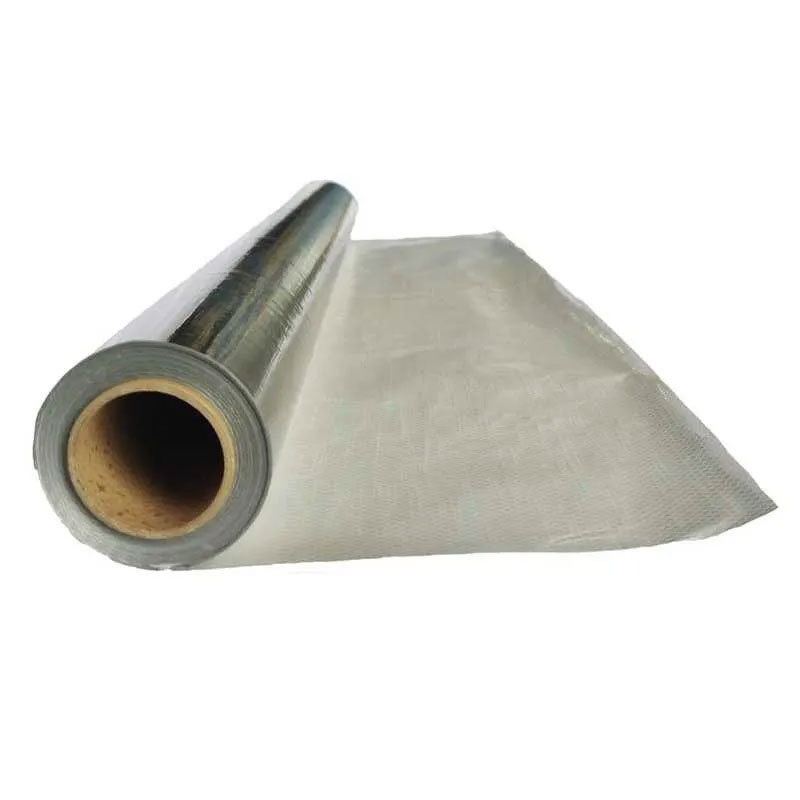
On the other hand, vapour control layers prevent condensation. They sit on the inside, or the ‘room side’ of insulation, and prevent moisture from humid air passing through the walls or roof.
Fire rated roofing membranes combine this science with the added safety feature of protecting against the spread of fire. However, they require more advanced manufacturing than standard, non fire rated membranes. This is because although they fulfil weatherproofing purposes, synthetic plastics and rubber alone are not enough to prevent the spread of fire. While many Class B fire rated membranes will self-extinguish once the heat source is removed, Class A1 and A2 include advanced upgrades for more effective fire protection.
Fire rated membrane classifications explained
| Class A1 Membranes | Class A2 Membranes | Class B Membranes | |
| Tier | Highest | High | Standard |
| Material | Core is made from non-combustible woven fibreglass with an aluminium foil coating. | Plastic is normally omitted and replaced with fibreglass. Because it is made from sand, it is non-combustible. A waterproof coating is applied to the core, usually made from PU, and this can char, meaning it cannot be classed as A1 but still offers excellent fire protection. | Multi-layered synthetic plastics with flame retardant coatings. The material can catch fire, but the chemicals found in the coating will starve the fire of oxygen, slowing the spread of flames. |
| Features | 100% non-combustible. They do not ignite, spread, or add fuel to any fire or flames. Extremely advanced, these membranes do not even emit smoke A more recent development, one compromise is that they often do not adhere to the highest W1 water-tightness standard, but are W2 instead. | Offers one of the highest levels of fire protection for membranes, offering limited combustibility. They can char and technically catch fire but they will not contribute to the fire actually spreading. | Self extinguishes once the heat source is removed. Limited combustibility. |
Why fire performance matters in roofing
Both residential and commercial roofs can spread fires because they contain many combustible materials installed close together. By using a non-combustible membrane, roof systems can significantly slow the spread of flames and smoke, giving occupants more time to escape, potentially saving lives. It is imperative that specific building materials are classified to the correct fire ratings. To ensure this, published legal documents clearly state rules and regulations on fire classifications of building materials, especially in high-risk buildings.
After the catastrophic Grenfell Tower incident in 2017, The UK government introduced The Building Safety Act 2022, and revised Approved Document B. This updated legislation came in the wake of preventable spread of fire and unnecessary death and injury. The main outline in relation to fire-rated building materials, including membranes, can be found in the section below.
UK building regulations and standards
Below outlines the main points relating to fire safety in each legislation.
Building Safety Act 2022
- Outlines stricter measures for fire safety in roofing and other building materials.
- States that whole-system or end-use testing is required – meaning the materials must be tested as they will be installed in their final state, for example, next to insulation and substrates.
- Relating to fire-rated roofing membranes, The Building Safety Act specifies who is liable if the membranes are not up to the legal standard. If a product manufacturer markets a membrane with false fire performance claims, or sells a faulty product, they can be sued directly. So, if a membrane causes a fire safety risk, the manufacturer is liable for the financial and economic costs to fix it.
Approved Document B
- Reiterates Regulation 7, that combustible materials on the external walls of high-rise residential buildings (18m+) are banned. It says: “Subject to paragraph (3), building work shall be carried out so that materials which become part of an external wall, or specified attachment, of a relevant building are of European Classification A2-s1, d0 or A1 (classified in accordance with the reaction to fire classification).”
- It also states that external wall membranes must have at least a Class B-s3, d0 fire rating: “Membranes used as part of the external wall construction should achieve a minimum classification of European Class B-s3, d0.”
- However, there is a slight nuance to this when it comes to fire-rated membranes. Approved Document B relies heavily on full-system testing. For example, it recognises that a Class E membrane will perform very differently if it is surrounded by non-combustible materials vs if it is exposed to fire alone. For this reason, there is not a minimum fire rating requirement for roofing membranes alone. However, the whole roof system must exactly match the manufacturer’s ‘as-tested’ system in order to meet legal fire safety requirements.
Testing
The main test that is carried out to approve building products and membranes as fire rated is EN 13501-1. This is not one singular test, but rather, determines building materials as fire-rated using data from five different tests.
Core combustible materials tests (Classes B-E)
This tests whether or not the materials rapidly accelerate a fire. It is split into two parts:
The single burning item test (SBI)
This test simulates a fire starting in the corner of a room, and for 20 minutes, a sample of the material being tested is exposed to a 30 kW propane burner. It measures the rate of fire growth (FIGRA), or fire growth rate index. In other words, it measures how fast the heat release increases from the sample. The main purpose is to determine whether the material could contribute to the spread of a developing fire and escalate it to the rest of the room.
The ignitability/small flame test (EN ISO11925-2)
The sample material is placed above filter paper. It is then set alight with a 20mm high flame, at a 45 degree angle, for either 15 or 30 seconds. A lab carefully inspects whether the flame spreads more than 150mm during the allotted time, and whether any falling embers ignite the paper underneath.
Non-combustibility tests
These tests determine whether the material will be given an A1 or an A2 fire rating, the highest ratings a product can receive.
The non-combustibility test (EN ISO 1182)
The sample is placed inside a cylindrical furnace at 750 degrees celcius. It measures whether the core temperature of the furnace suddenly increases, the sample decreases in mass, or any flames ignite.
The gross heat of combustion/bomb calorimeter test (EN ISO 1716)
This is to calculate the maximum possible heat load the material could contribute to a fire. Labs grind the sample into a powder, place it in a bomb chamber, and set it alight to completely combust.
The floorings test
This tests flooring materials, as fire can spread very differently across a floor compared to a wall or roof. It measures the critical radiant flux, which is the minimum amount of energy a fire needs to maintain the spread of flames. It also tests the obscuring of smoke.
For both fire-rated breather membranes and VCLs, EN 13501-1 strictly requires manufacturers to test materials in their final state. In other words, manufacturers must conduct tests in an environment equivalent to the conditions in which the materials will actually perform. This is because technicians need to measure and observe how they react with other building materials, such as insulation and substrates. If the membranes have any matching tapes or joining adhesives, labs will also test these alongside the membrane.
CE Mark
A CE mark on a fire-rated membrane is essentially the legal stamp of approval. It is there to provide absolute proof that a product has undergone the rigorous testing required to approve it as fire-rated or otherwise. This means a government-approved third-party assessor could randomly test the product and verify that it performs as the manufacturer states. CE marked products come with a Declaration of Performance. This is a legal document that holds the manufacturer financially and criminally liable if the product doesn’t adhere to the safety classifications it claims to.
Novia fire-rated membranes comparison table
Below is a table outlining the features and benefits of each Novia fire-rated membrane, and whether it is a breather membrane or a VCL.
| Product Name | Fire Rating | Membrane Type | Water Resistance Rating | Applications | Features |
| Novia UV Facade FR | Class B | Breather membrane | W1 | High-rise constructions Open rainscreens | CE compliant to EN 13859-1 for pitched roofing and EN 113859-2 for walls. Made from TPU (thermoplastic polyurethane) which combines the durability of plastic and the flexibility of rubber. For use in high rise applications under relevant sections of Fire Safety in accordance with Approved Document B. Lightweight. UV resistant. Can be used on rainscreen applications where 40% or less of the total area of membrane is exposed. |
| Novia FR Breather Membrane | Class B | Breather membrane | W1 | Pitched roofs (both cold roofs & warm roofs). Insulated walls | For use in high rise applications under relevant sections of Fire Safety in accordance with Approved Document B. CE compliant to EN 13859-1 for pitched roofing and EN113859-2 for walls. Has excellent UV performance but not completely resistant. Made from TPU (thermoplastic polyurethane) which combines the durability of plastic and the flexibility of rubber. |
| Novia FR Pro A1 Breather Membrane | Class A1 | Breather membrane | W2 | High-rise and high-risk constructions | Highest achievable fire rating Does not emit smoke, making evacuations safer Class A1 fire performance in accordance with EN 13501-1. CE marked and compliant with EN 13859-2 for walling systems. |
| Novia 500 Gauge Polythene FR | Class B | VCL | N/A | Domestic, high-rise, and high-risk constructions Roofs Walls | Air and vapour control layer. CE marked and compliant to EN 13984. Flame-resistant. Air tight. Moisture vapour resistant. For installation on the warm side of insulation. |
| Novia Flamepro A1 FR | Class A1 | VCL | N/A | High-rise and high-risk constructions Roofs Walls | Air and vapour control layer. Exceptional strength Highest fire performance rating. 1.48m roll width for easy installation with just a single overlap needed. Exceptional air tightness and moisture vapour resistance. |
| Novia VariCheck FR | Class B | VCL | N/A | Domestic modern insulated walls and roofs. | Air and vapour control layer. CE marked and compliant to EN 13984. Cost-effective. Flame resistant. Low vapour resistance. Air tight. Adapts to seasonal humidity, being more permeable in Summer and less in Winter. |
| Novia VC 4000 FR | Class B | VCL | N/A | High-performance insulated walls and roofs High-risk and high-rise constructions. Applications prone to high moisture vapour exposure | Air and vapour control layer. 98% reflective, improving U-values. Lowers risk of interstitial condensation. Marked and compliant with EN 13984. Air tight. Flame resistant. |
How to choose the right membrane
Choosing the right membrane for your project comes down to a few factors. The first is whether you require a breather membrane or a vapour control layer. Remember, breather membranes offer a certain level of water resistance, with some being completely watertight, whereas VCLs do not, but must be airtight. You’d install a breather membrane on the ‘cold side’ of the building, and the VCL on the ‘warm side’.
The next factor will be UK building regulations. This means you’ll need to consider the height of your property and whether it is high-risk. You can find this criteria in Approved Document B.
You can look into a product’s end-use test data, to see if it was tested in combination with the exact building materials you are using, for example, the insulation and substrate types.
Always look for the official CE mark if you’re unsure. Fire-rated membranes from Novia have a CE mark, with a Class B rating or higher, so you can have peace of mind that the membrane you are installing is fire-safe and complies with legal requirements.
FAQs
What is a fire-rated roofing membrane?
A fire-rated roofing membrane is a layer of material that is either a breather membrane for the cold side of a building, or a vapour control layer for the warm side. It should have a fire rating of Class B or higher. It will have undergone rigorous testing to be compliant with legislation and meet legal standards found in Approved Document B.
Do roofing membranes need to be fire-rated in the UK?
No. Roofing membranes can range anywhere from Class A1 (completely non-combustible) all the way down to Class F (easily flammable). However, the type and height of the building may require the membrane and other roofing materials to reach a specific standard or to have achieved a minimum fire rating. Approved Document B outlines which property types need fire-rated membranes.
What does B-s1,d0 mean?
This is a specific classification under European fire safety standard (EN 13501-1). The ‘B’ means the material can catch fire but will slow down the spread of flames. S1 refers to ‘smoke’. In this case, it indicates that the material produces little to no smoke if it catches fire. If it were s2, it would mean that the material produces a medium amount of smoke. s-3 is a significant amount.
d0 refers to ‘droplets’. In this case, the material does not produce flaming droplets that could fall down. This helps in preventing the spread of fire and injuries to anyone underneath. If it were d1, this would tell us that the material does produce a moderate amount of flaming droplets. d2 would be a hazardous amount.
What is the difference between A1 and B-s1,d0 membranes?
The main difference is in the combustibility. A1 materials are completely non-combustible, produce very little heat and smoke, and no flaming droplets. Class B has a very low contribution to fire spread, and testing cannot deem it completely non-combustible. s1-d0 means that like A1 products, it does not produce much heat or smoke, and no flaming droplets.
Can a breather membrane be used on both roofs and walls?
Yes, so long as it is installed on the cold side of the insulation.
Which Novia fire-rated membrane should I choose?
If you require a breather membrane, consider the FR Pro A1 for ultimate fire protection, FR Breather for optimum watertightness, or the UV Facade FR for UV protection on open rainscreen applications.
If it’s a vapour control layer you need, the FlamePro A1 FR offers the highest fire rating, the VC4000 FR for improved U-values, and the VariCheck FR for climate adaptability.
Are fire-rated membranes suitable for high-rise buildings?
Yes, although you must check Approved Document B to see which rating your building needs. This will depend on the height and type of building. It states that the higher a building is, the higher risk it will be in the event of a fire. Buildings taller than 18 metres present a higher fire risk and therefore require stricter standards for structural fire resistance. The way installers position the membrane also plays a crucial role in determining the required fire rating. For example, installing a membrane horizontally or where it intersects an external wall can change the requirements.
What documentation should I check before specifying a membrane?
Always check Approved Document B, as it is the official UK government guidance on meeting legal fire safety standards. You can ask the membrane manufacturer, such as Novia, to provide any evidence or documentation needed to establish a product’s fire rating.
Final thoughts
Fire ratings help ensure that roofing and construction products meet safety requirements and that installers use the right materials for each application. The bottom line is that fire safety saves lives and prevents injury. With the help of this article, you should now have a better understanding of what these ratings mean and why roofing membranes need them. Don’t forget, if you’re unsure of anything concerning legal fire safety standards, always refer to Approved Document B. If you need more information on any of the fire rated membranes mentioned in this article, please give our knowledgeable team a call on 01752 692 760.
Was this guide useful?
Mentioned in this product guide: